Project type: Land Use and Forestry
Project location: Mels (Canton of St. Gallen), Switzerland
Project status: In the planning stage; no certificates available
Emissions reduction for the entire project over 50 years: 330 climate impacts
This project involves the restoration of a lowland bog in the Schwettnen bog area, which reduces the release of greenhouse gases into the atmosphere. In addition to its contribution to climate protection, the rewetting of the bog brings benefits for biodiversity, the water cycle and the local community.
Intact peatlands are huge carbon sinks. Globally, they store around 30 per cent of soil carbon, even though they cover only about three per cent of the Earth’s land surface. Today, inventoried lowland peatlands are protected; however, most were drained via drainage ditches before legal protection was introduced, in order to enable agricultural use. Although the peatlands are protected, many remain in a drained state and emit CO₂. The reason: there is not enough funding to restore all drained peatlands. Peatland restoration is one of the nature-based solutions and is an important tool in the fight against global warming.
The project: Schwettnen bog
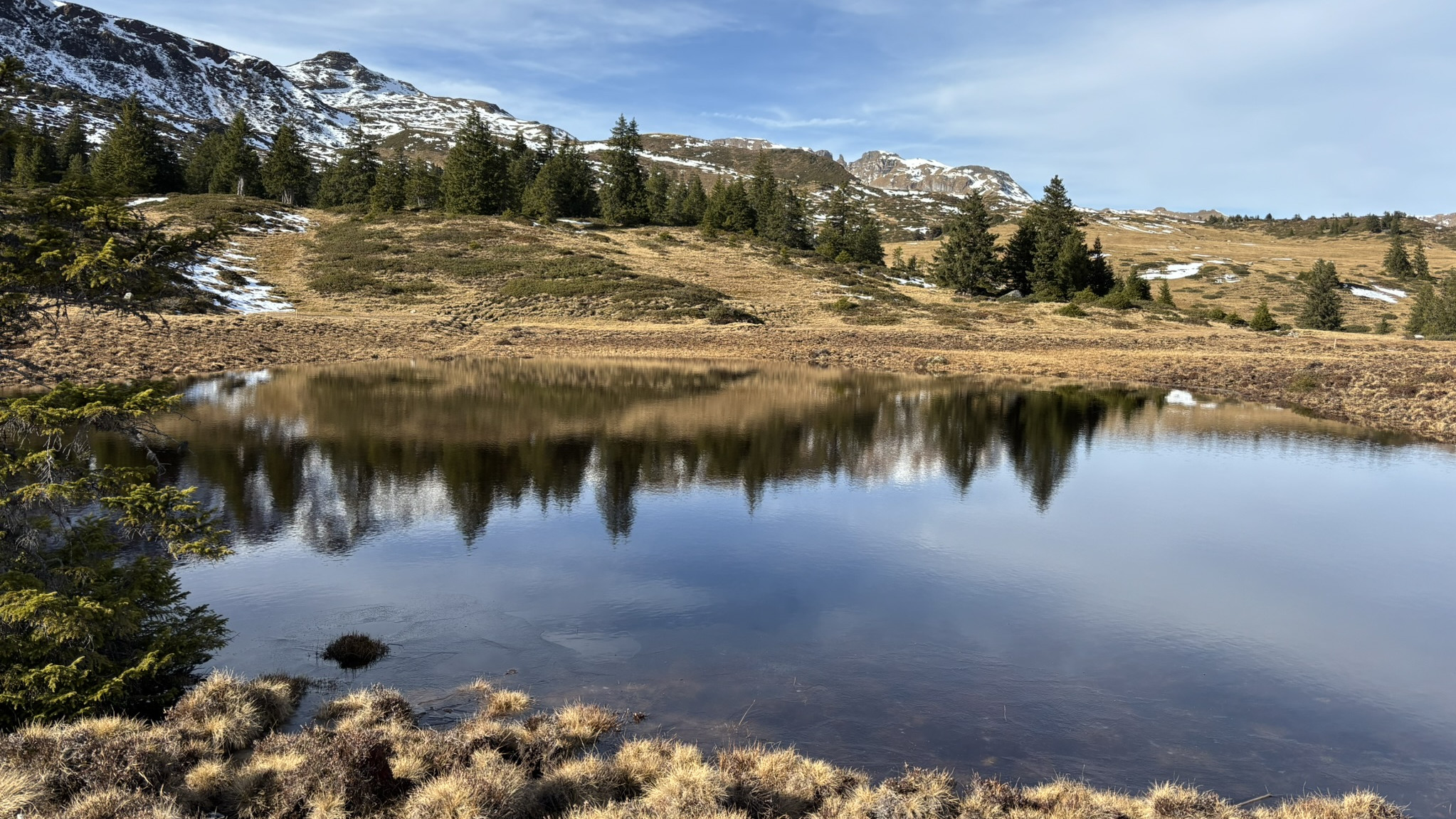
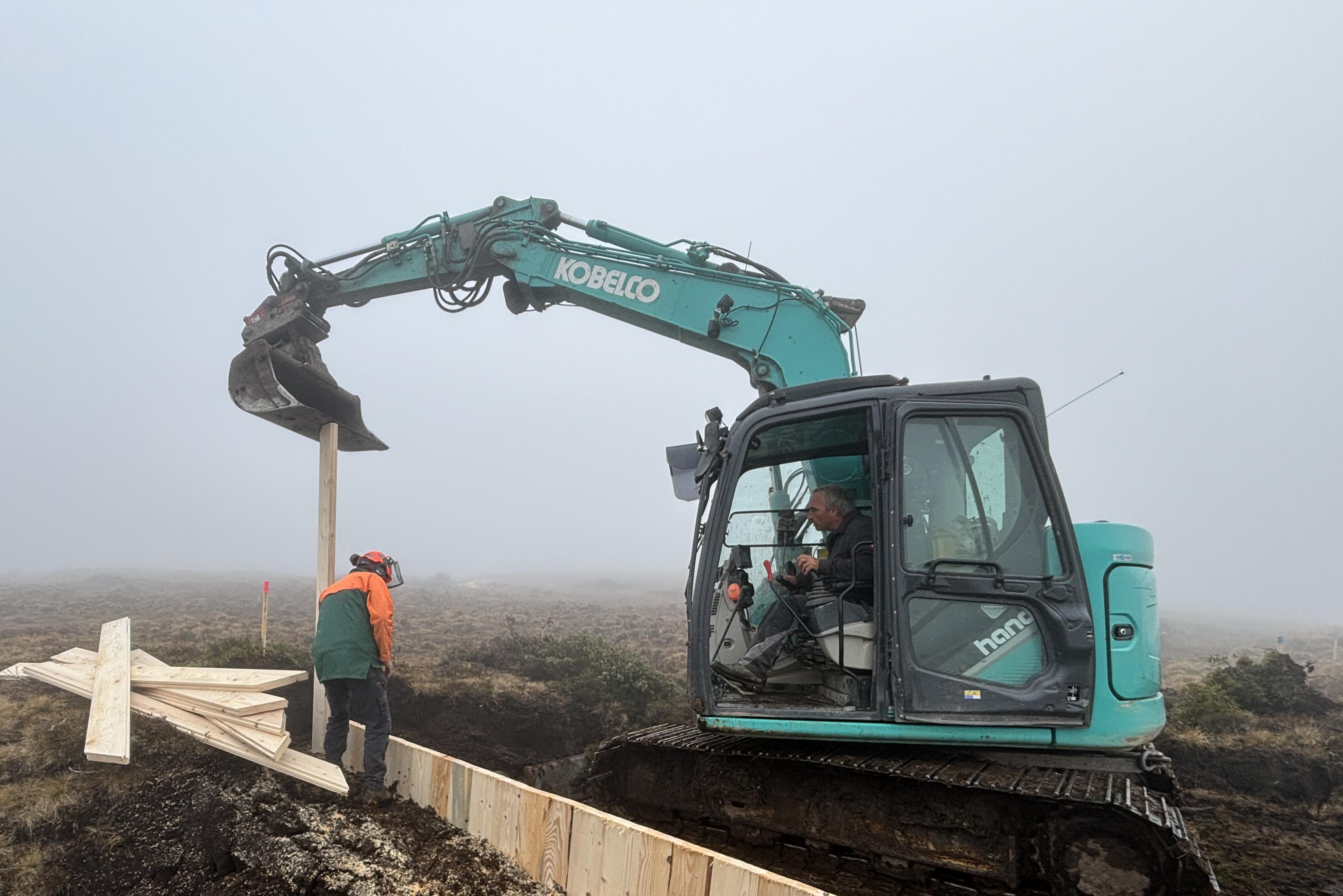
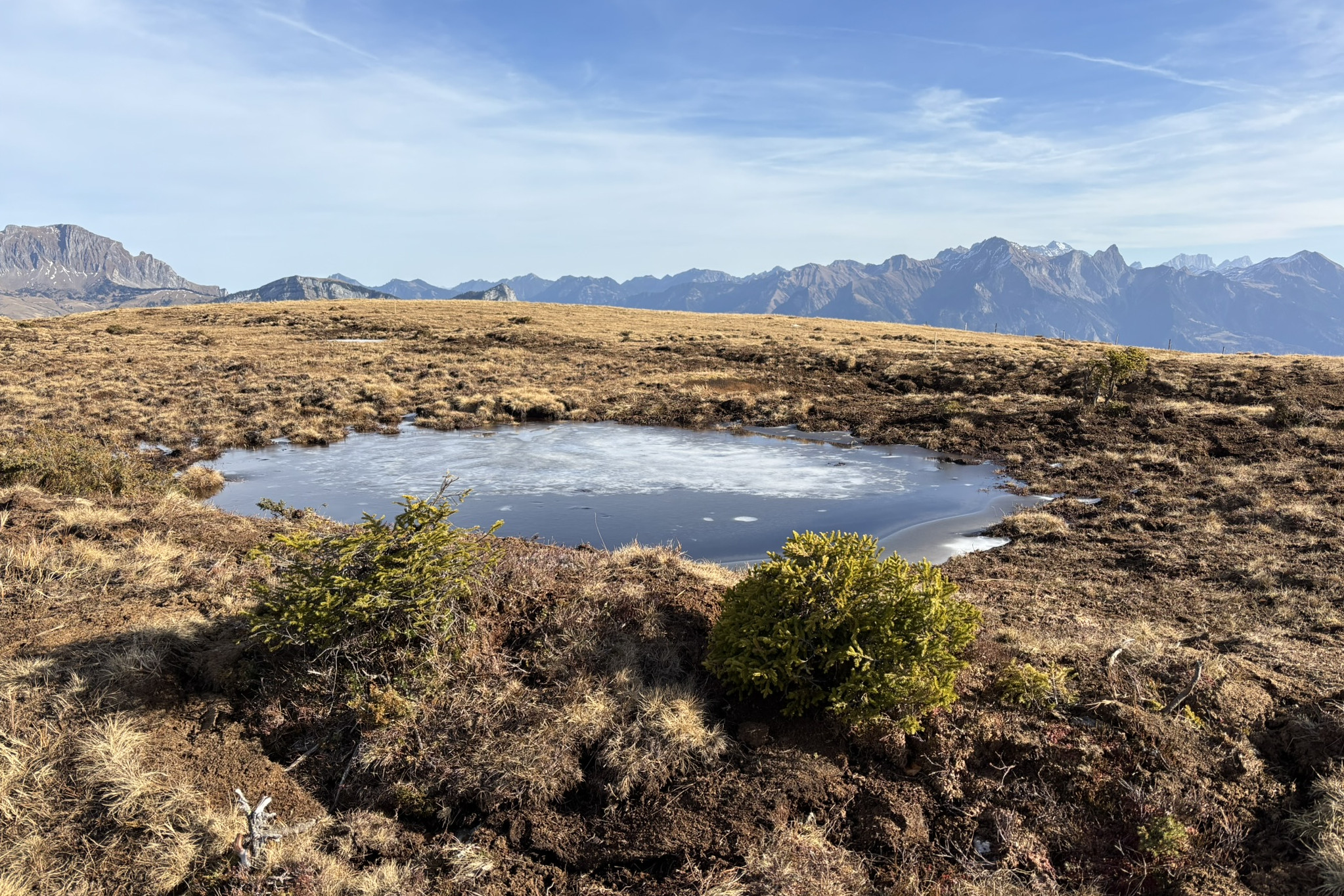
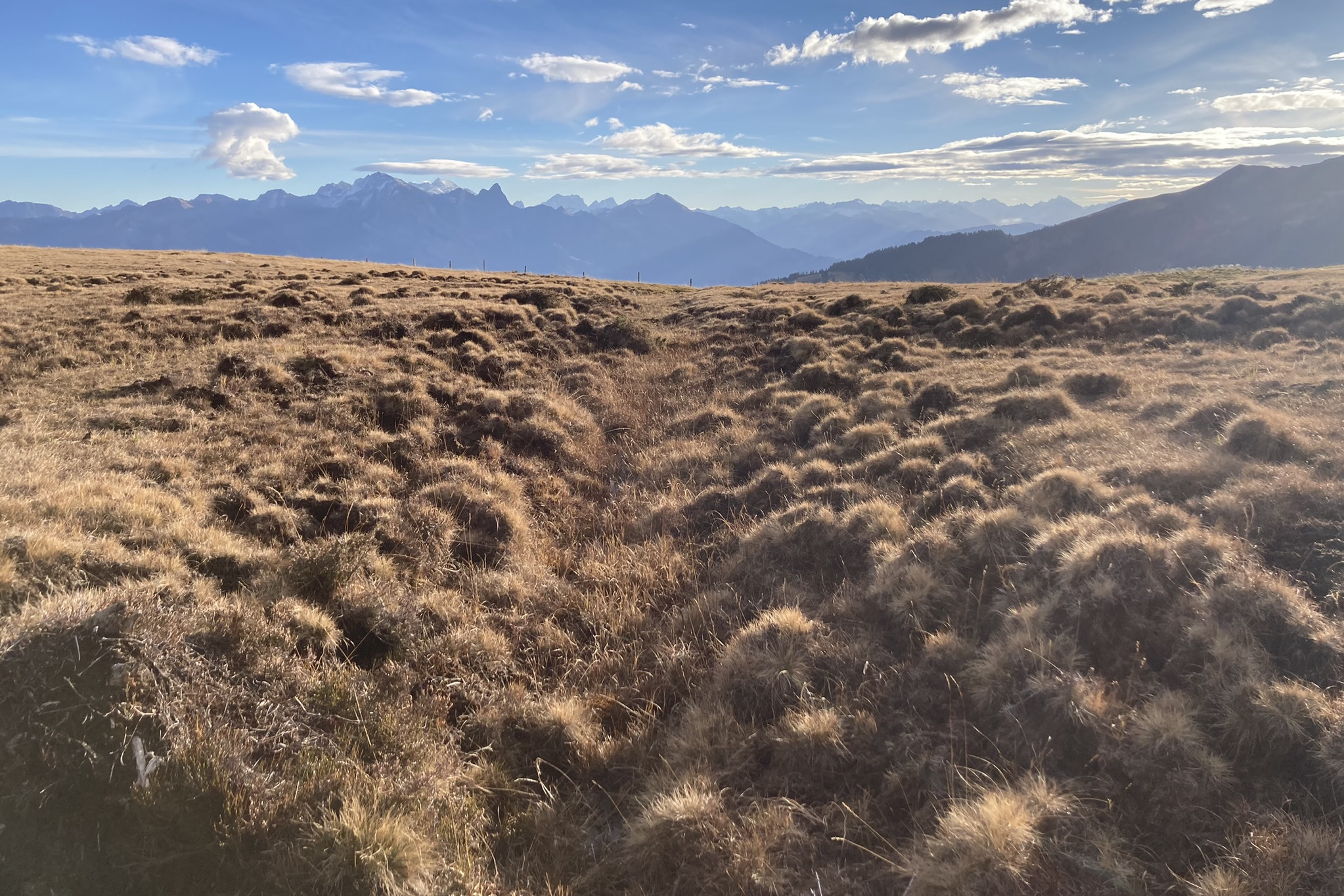
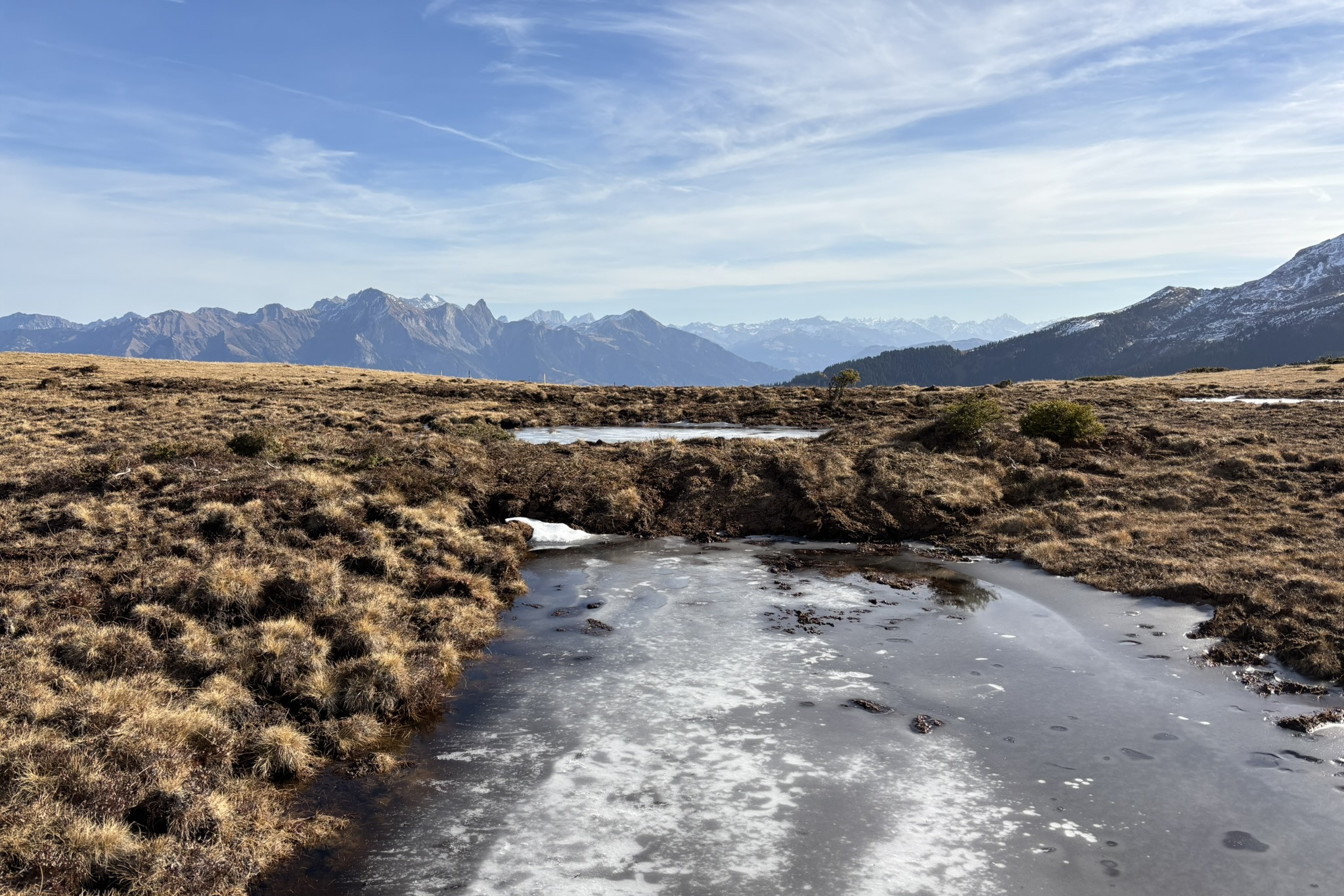
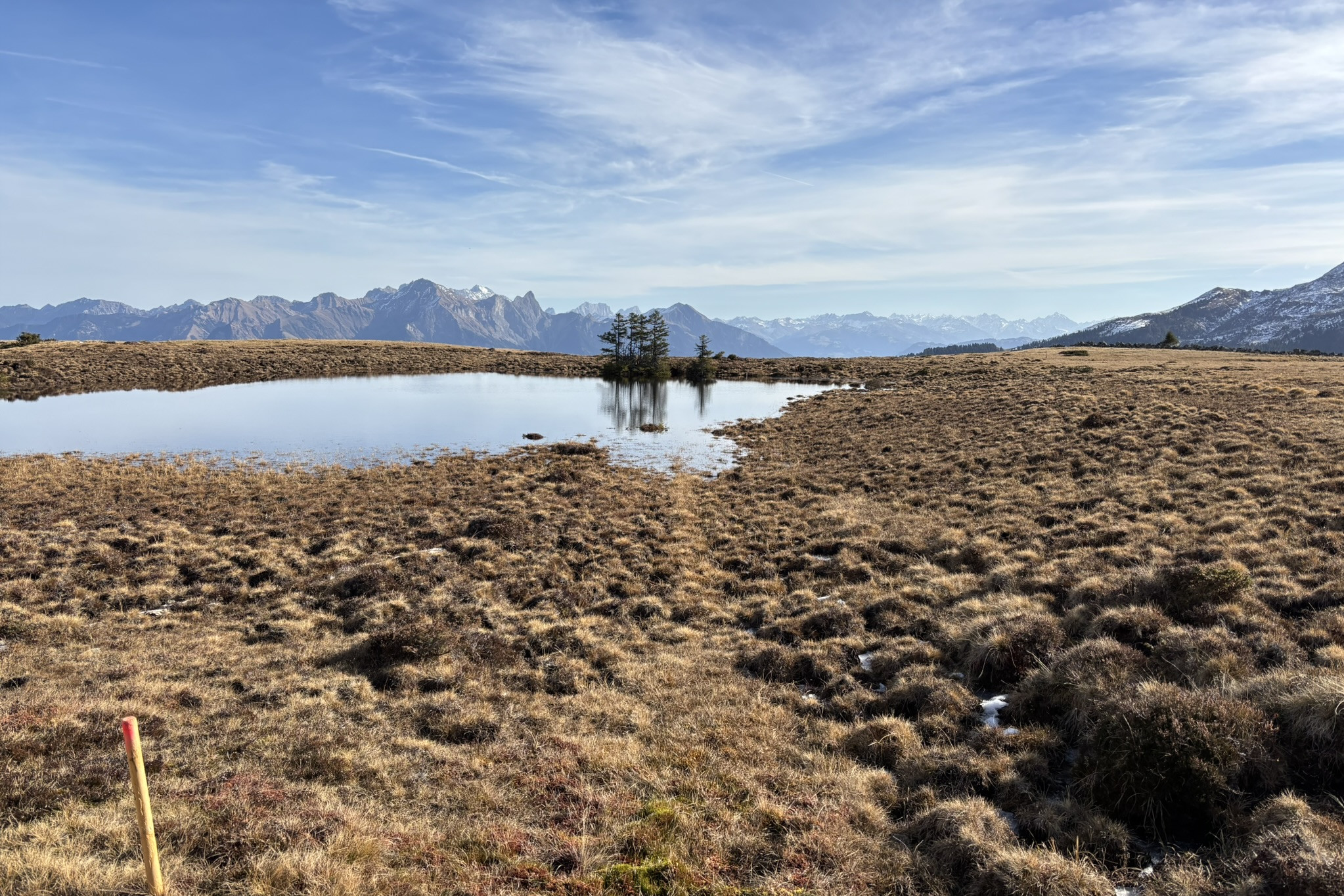
The Schwettnen peatland is situated on the Tamons Alp, at around 1,780 metres above sea level. The peatland has been drained by numerous ditches for over 80 years. The peatland is listed in the regional peatland inventory and is therefore protected. Like most peatlands, it was once drained using drainage ditches to enable agricultural use. Despite legal protection, parts of the peatlands remain drained, as federal and cantonal funds are insufficient to restore all drained peatlands. As part of the rewetting project, the drainage pipes and ditches will be closed.
Why is funding from myclimate needed?
The climate protection project closes the funding gap and is therefore crucial for the implementation of the restoration. It is supported by the municipality of Mels and contributions from the canton (St. Gallen) and the federal government. The restoration work will be completed by the end of 2026.
Intact peatlands as sustainable carbon sinks
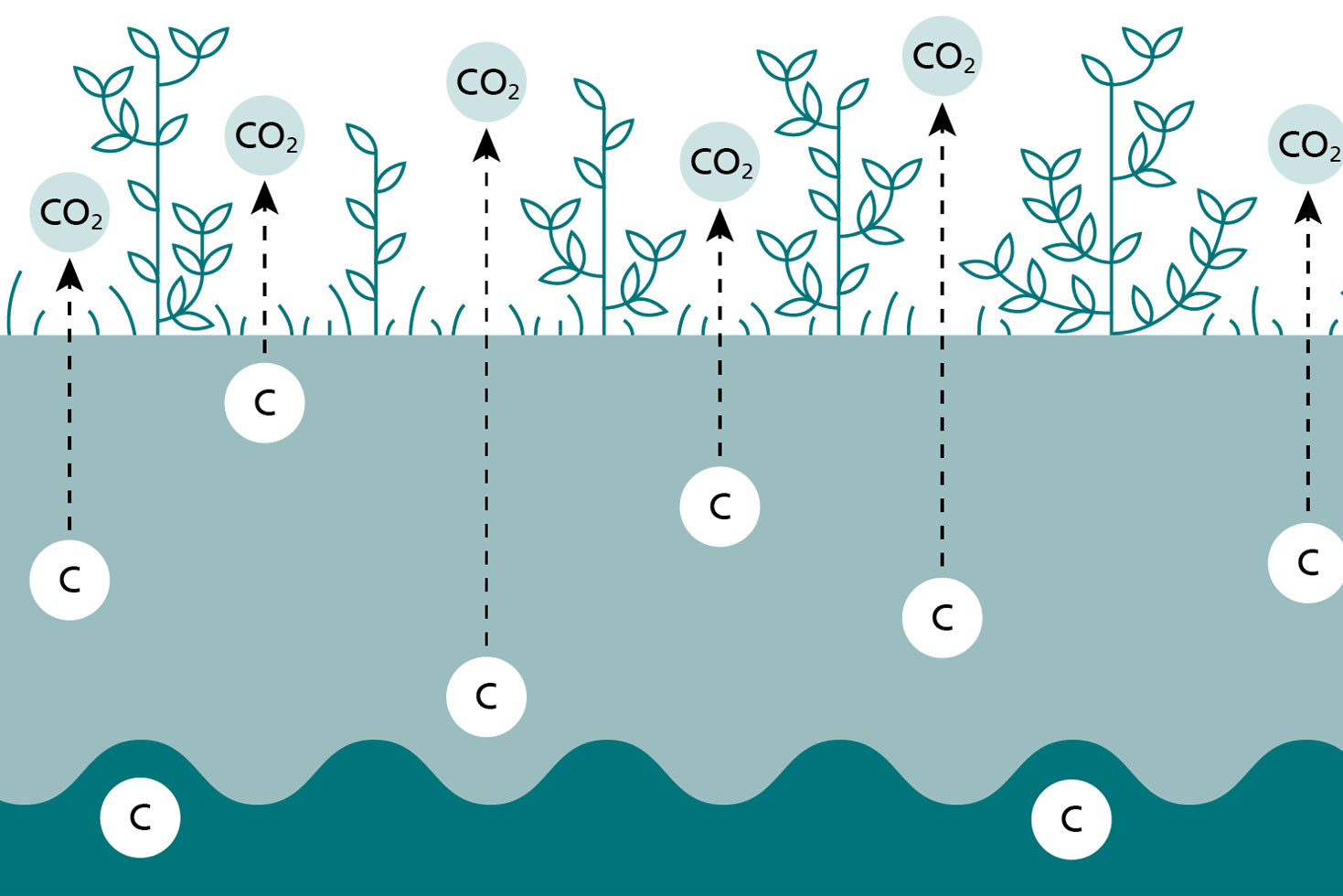
In drained peatlands, oxygen enters the soil, causing the carbon in the peat to be converted into CO₂ and released. To rewet a peatland, the drainage ditches must be physically closed. An intact, near-natural state with a high water table prevents the decomposition of organic material and preserves the carbon in the soil. A calculation method developed by the Swiss Federal Institute for Forest, Snow and Landscape Research (WSL) is used to quantify the greenhouse gas emissions avoided. According to the max.moor approach, the carbon savings are calculated based on the carbon content in the peat and converted into CO₂ equivalents. This is based on a soil analysis of the project area, in which the average carbon content was measured.
Sustainable added value for the environment and the region
The restoration of a drained peatland not only prevents long-term CO₂ emissions but also makes an important contribution to nature conservation by creating valuable habitats for rare animal and plant species. Furthermore, the restoration helps to improve flood protection and the microclimate. A restored peatland also enhances the landscape and provides the local population with a place for recreation. In addition to the ecosystem services, there are also socio-economic benefits: the majority of the investment flows into the region and expertise in peatland restoration is promoted.
You can find further peatland projects within the scope of myclimate’s peatland programme here.
*As of May 2025. Find out in our FAQ how myclimate reports on these SDGs.
A restored peatland improves flood protection and water quality.
Restored peatlands are major carbon sinks.
0.5 hectares are being rewetted, providing a valuable habitat for rare plant and animal species.
7840