Over the past few decades, the voluntary carbon market has evolved from a niche concept into an established instrument of international climate finance. Its roots go back to the 1990s, when binding international climate targets were agreed for the first time under the Kyoto Protocol. It was against this backdrop that the foundations were laid for market-based mechanisms designed to promote investment in climate protection and sustainability.
myclimate was founded during precisely this early period. What began as a small ETH spin-off involving just a few committed environmental science students has developed into an international climate protection organisation. From the very beginning, the focus has been on promoting the expansion of renewable energy and other climate protection measures worldwide, and on generating verified emissions reductions as a result.
Since then, much has changed in the area of project quality. International standards have continuously raised the bar for climate protection projects. Methods have become more precise, verification procedures stricter and transparency more important. At the same time, new players such as independent rating platforms are providing additional guidance and comparability in the market.
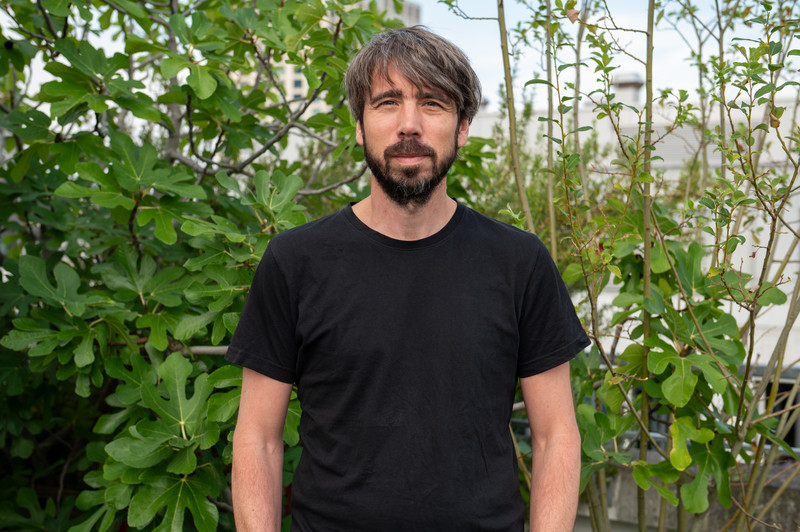
Hardly anyone at myclimate has followed the development of the voluntary carbon market for as long and from such a wide range of perspectives as Thomas Finsterwald. For 20 years, he has been involved in the development, implementation and quality assurance of climate protection projects. This is the perfect opportunity to look back together: how has project quality changed over the past two decades? What role do standards, ratings and independent audits play today? And where is the market heading next?
Thomas, internally we sometimes affectionately refer to the ‘myclimate dinosaurs’. You are one of the people who have shaped the organisation over the decades. When you think back to the early days: what did a typical working day at myclimate look like 20 years ago?
Thomas Finsterwald:
Oh, that was a long time ago. I think there were six of us back then, including the managing director. The carbon market was in its infancy; the EU Emissions Trading Scheme had just been established but wasn’t yet open to large-scale CO₂ emissions reductions. The ‘climate cent’, which oil importers intended to use to implement the mandatory carbon offsetting measures, had just made it possible in Switzerland for a large-scale demand for Swiss CO₂ reduction projects to emerge in the future. A massive surge was evident in the international offsetting market; there was an incredible sense of optimism and veritable euphoria, although this was, of course, largely confined to the circle of ‘insiders’. New methods for certifying projects were developed and constantly debated; international funding schemes were set up; major conferences and trade fairs sprang up; and demand for so-called CERs (Certified Emission Reductions) rose and rose, with correspondingly high prices (until the crash between 2011 and 2013).
Now back to the six of us post-graduates in Zurich’s 5th district. At a time when more and more major players – such as financial institutions, insurance companies and consultancy firms – were entering the market, we were a small ETH spin-off with little experience and modest financial resources, but with big ambitions, a great deal of passion and a mission to offer the largely profit-driven certification market an environmentally and socially sustainable, not-for-profit alternative. Looking back now, it is impressive to see how committed clients and companies placed their trust in us during those early days, enabling us to take our first major steps.
Our day-to-day work was characterised by a great deal of uncertainty, both in the certification of projects – where the rules and tools were still in their infancy and had to be constantly interpreted and re-discussed (in my first year, the Gold Standard had just launched its own project certification scheme) – as well as amongst clients and the general public, where there was absolutely no awareness or understanding of what we had to offer. Whether you were in sales or on the project team, you were often out and about explaining what we actually did and why it made sense to give us money for it. On the project side, it was also no easy task to find new, suitable partners and projects. Our international network was still very limited, as were the means of communication available at the time – particularly in the structurally disadvantaged regions of the Global South that we were targeting – and many of the implementing partners who were to carry out the projects on our behalf simply lacked any prior knowledge of the new mechanism. Trust had to be built up from scratch everywhere. However, we soon had enough initial projects for which we drew up the relevant documents, prepared monitoring plans and reports, and carried out project assessments and certifications.
Which project did you work on first back then? Are there any memories or experiences that have stayed with you to this day?
In 2006, we managed around 7 projects, compared with more than 50 today in 2026. The project team of 2–3 people was so small that, in a way, we were more or less involved in all the projects. Personally, I was heavily involved from the start in a small-scale water project in Indonesia, which remained in our project portfolio until 2022. The most memorable experience was definitely when, after all the difficult communication via email and dreadful Skype connections, I was finally able to visit the project and the local team for the first time – my very first trip to Indonesia. I was actually travelling without a mobile phone back then; it was quite exciting and nerve-wracking, wondering whether I’d actually be picked up at the agreed meeting point. It certainly caused a few beads of sweat. But the area was beautiful, the people were really lovely, and I finally got to see ‘my’ project in the rainforest – one I’d already invested so many hours in back home in Zurich. I always had an overnight stay with the workers from the partner organisation in small huts, sharing a common room, and I reckon they must have had quite a laugh at my inexperience, even if they didn’t show it.
You witnessed the rise of the voluntary carbon market at first hand. In your view, what were the key factors behind its growth and success?
One important – indeed, probably the most important – catalyst and milestone in the history of carbon markets was the agreement on the Kyoto Protocol in the late 1990s. For the first time, countries were given binding greenhouse gas reduction commitments, and a market mechanism was created that enabled the purchase and crediting of emissions reductions from other countries (the CDM). A tonne of CO₂ suddenly acquired a monetary value and, consequently, a trading value; for the first time in history, it became attractive for countries and companies to invest in such projects. This was an extension of the ‘polluter pays’ principle to ‘climate damage’, which was already a major step forward.
The voluntary market adopted this idea of purchasing certified emissions reductions to finance projects, thereby enabling voluntary offsetting of corporate and individual emissions. The idea behind it was strikingly simple: one can – and could – take responsibility for one’s actions and one’s ‘CO₂ waste’ in a direct and efficient manner and, in the case of companies, communicate this accordingly. It linked the world of environmentally conscious people with development cooperation, whilst also aligning with the liberal economic principle of reducing emissions where it is cheapest and most efficient to do so. Many people were initially unable to come to terms with this, but many others were.
In short: the market on a large scale – and with it the voluntary market – was initiated, driven and strongly influenced by developments and demand within the mandatory Kyoto market. The voluntary market has essentially adopted this mechanism but expanded it to meet the needs of voluntary customers; for example, by having the Gold Standard demand greater social and environmental sustainability, stakeholder involvement and higher standards in general.
However, the sector has also experienced difficult years. What contributed to the crisis of confidence, and what lessons has the market learnt from it?
There have been a number of ups and downs.
The 2008 financial crisis led to a fall in demand, and the EU Emissions Trading Scheme was oversupplied with certificates whilst simultaneously reducing the permitted volume of emission certificates. The concurrent large number of projects that had been set up during the growth phase and were now delivering reductions led to a price collapse in 2011 and 2013 to just a few cents per tonne in the regulated market, resulting in numerous bankruptcies amongst market players and, for others, a withdrawal from the carbon market. The voluntary market managed to hold up remarkably well during this period, partly because in the voluntary market people do not simply buy certificates, but rather the projects and the stories behind them, and were therefore willing to pay a little more for them. But of course, this market shock was also very much felt here, because many projects from the mandatory market were now being offered on the voluntary market as well.
From quite early on – by 2008 at the latest – there were repeated discussions about the additionality of projects, that is, whether a project actually achieved an additional impact (and would not have taken place anyway). Both in research circles and amongst market observers, there was growing criticism that this was by no means always the case. Although this affected only a few types of project in a handful of countries – predominantly large-scale projects such as wind and hydropower plants and industrial gas projects, none of which were offered by myclimate – the loss of confidence in the entire CO₂ offsetting mechanism was considerable. However, it is precisely in the voluntary market that such criticisms have repeatedly led to restrictions on permitted projects, adaptations to the criteria for technologies, or the tightening of conditions such as the additionality assessment.
Fundamentally, one should not view the rules and criteria of carbon standards as rigid. Over the last two decades, these have been substantially adapted, expanded and improved, always taking into account the latest scientific findings and developments in the project countries, and, of course, in response to justified criticism from market observers.
From very early on, myclimate has focused predominantly on projects implemented in structurally weak, often rural regions. The issue of additionality in relation to large power stations and industry has not actually affected our projects; nevertheless, a loss of trust affects the entire sector, as it is not always possible to communicate this necessary distinction.
Criticism of the concept and the use of terms such as ‘climate neutrality’, ‘offsetting’ and ‘net zero’ arose very early on, particularly from NGOs and consumer protection organisations. By around 2022, this had escalated to such an extent that the media was constantly harping on about ‘greenwashing’ in connection with the carbon market. Taking this criticism on board, myclimate decided as early as 2022 to move away from the terms ‘climate neutrality’ and ‘offsetting’ towards the concept of climate finance. Nothing changed in terms of the meaningful projects with their corresponding impact, but the way myclimate and its customers communicated had to be adapted, and it was a challenge to take all our customers along on this journey. The standards bodies and market participants have also largely taken up this issue and incorporated it into various new rules governing offsetting and climate neutrality claims.
Hardly had this been resolved when, almost simultaneously, criticism arose that too many emissions reductions were being credited in certain projects, primarily due to an incorrect baseline development. Although this was primarily a scandal centred on a few REDD projects – and specifically those under the VERRA standard – and therefore did not directly affect myclimate, the rules were tightened across the entire market and the conservative assumptions for various project types were further strengthened. This affected myclimate most notably in the area of community projects, the impact of which must now be calculated using more conservative assumptions. Since these public scandals and the resulting loss of trust, there has been a desire to play it safe, which in turn may mean that funding meaningful but relatively more expensive projects could become a problem, as this is directly linked to the emissions reductions achieved.
If you compare project quality today with that of 20 years ago: what has changed the most? I’m thinking of standards, audits, rating platforms and due diligence processes, which play a much greater role today than they used to.
An incredible amount has changed in this regard. As already mentioned, the rules, methods and guidelines of the standards have changed in such a way and at such a pace that one has to keep up. The direction is clear: even greater certainty and even more conservative impact calculations are being incorporated, with all the advantages and disadvantages this entails for clients and projects. The tools, the interaction with the standards and the registers for the certificates awarded have, of course, become significantly more digital and professional. And more transparent too: all projects, their key documents, audit reports and certification status are publicly available.
I also note that project audits have become more professional and are identifying and addressing critical issues in a more targeted manner. In response to the crisis of quality and trust, the ICVCM (Integrity Council for the Voluntary Carbon Market) was founded in 2021; projects and methodologies are now assessed against its integrity criteria and, where appropriate, awarded the Core Carbon Principles labels. myclimate supports this development and will now have all projects, where possible, assessed and certified accordingly.
The Paris Agreement, which is now really gaining momentum with the market mechanisms set out in Articles 6.2 and 6.4, means that more and more projects require the approval of the host countries, and a decision can be made as to whether or not a corresponding adjustment applies.
Rating agencies were not a concern for myclimate for a long time, but have now become an integral part of the market and are assessing an increasing number of projects. It remains to be seen to what extent this will improve quality in the long term and lead to a price premium for ‘good’ projects. It is important not to forget that, in this context, the assessment primarily focuses on the risk associated with achieving a genuine tonne of emissions reductions, and that – particularly in the case of myclimate projects – this is only one aspect of what we consider to be a good project. We are also concerned with long-term structural changes on the ground, with the people involved and the ways in which they can benefit from the project – and that rarely fits into an AAA-BBB framework.
Internally at myclimate, things run very differently now compared to when I started in 2006. We have a professional project team of over 30 colleagues who plan, implement and certify both international and regional projects (in the DACH region). We have made quality a key priority internally and are continuously improving our processes and tools. As a foundation, we want to support projects that achieve a particularly high impact, rather than simply focusing on the cheapest possible tonne of CO₂. Our due diligence processes enable us to gain a thorough understanding of the projects and their risks before we sign a contract, and to monitor them critically throughout the project’s duration. We aim to work in partnership with our local project implementers, to engage with them as equals and remain so, whilst always discussing the use of funds with local circumstances in mind. As a foundation, we are committed to channelling at least 80 per cent of the funds directly into the projects, which sets us apart significantly from many competitors and, in my view, is also a key factor in our quality. New technologies are not only being utilised in the projects themselves, but are also improving the measurement of impact during monitoring: digital tools and geodata are used to collect and process data, significantly improving quality compared to the past.
Where do you see the greatest areas of tension in project development today? Are there conflicts of interest between project developers, investors, buyers and local communities?
I see a conflict between the increasingly low-risk investments and myclimate’s high-risk projects in the Global South. This means that clients and standards want as much certainty as possible – ideally no projects that could be criticised, no financial risks and no reputational risks either. Furthermore, clients would ideally prefer to pay for the impact only once it has already been realised. On the other hand, however, we at myclimate work precisely in areas and with project types that are not entirely without risk – and we do so with conviction.
Since 2008, we have been working in Madagascar with our partner ADES, which supplies more than 50,000 households with efficient stoves every year. Anyone familiar with Madagascar can imagine how beneficial this is in combating deforestation in the country and for the health and circumstances of families. Apart from that, ADES does incredible work for local staff and schoolchildren, and does so in rural areas as well as in the cities. A prime example of a good, meaningful project. However, the tonnes achieved are constantly being reduced by regulations and conservative assumptions, the requirements for the stoves are being raised, and monitoring requirements are being increased. Please do not misunderstand me here; in principle, all of this makes a great deal of sense in order to build trust and improve many projects. However, in the vast rural areas of one of the world’s poorest countries – parts of which are barely developed – production, distribution and monitoring cannot be carried out using the same technology or at the same low cost as in urban areas or more developed countries. This is a challenge and requires additional commitment from myclimate, as well as a willingness on the part of our customers to pay more for it.
What challenges must we, as an industry, overcome in the coming years to further strengthen trust and impact?
We must continue to constantly question ourselves – not only at myclimate, but also all other players in the market: where can we improve and be even more precise, but also where can we create greater impact for the climate, the environment and the population? What improvements can be made quickly, yet also endure in the longer term and bring about real change? Standards must constantly raise quality and adapt to the latest findings, without jeopardising planning certainty through constant adaptations or stifling less profitable measures through overly conservative assumptions. Clients must be prepared to pay a fair price for quality and, in doing so, must not merely look at ratings, but also examine the projects on the ground and discuss with us what impact they are having and how they generate added value in a wide variety of ways. At the same time, we must all work even more closely with clients, listen to the challenges they face in the complex landscape of climate protection and reporting obligations, and show them how we can support them along this journey with a wide range of solutions.
And finally, the million-dollar question: why should companies continue to take responsibility for emissions beyond value chain mitigation in future?
Because it is important. Within one’s own value chain, such a commitment makes perfect sense and is exactly the right thing to do in the long term. We support clients on this journey, but experience shows just how difficult this can be in a globalised economic system and how long it can take to implement measures effectively. Taking responsibility for existing emissions in the short term by providing financial support for other projects is therefore incredibly important in order to address the urgency of the problem. And because these projects are close to my heart: Even if one doesn’t wish to view this as part of a net-zero commitment or preparation, these projects are extremely important! Financing them enables such a significant impact in local communities and regions. Unfortunately, this isn’t possible, but if I had my way, I’d love to send everyone to visit a project…