The German Football Association (DFB) is the umbrella organisation for 27 football associations comprising around 24,000 clubs and more than 8 million members – making it the world’s largest national sports association.
In response to the strong desire of many amateur clubs to make a more active contribution to climate protection, the DFB has developed its own carbon footprint tool, which is free for clubs to use and was implemented in collaboration with myclimate.
The carbon footprint tool was developed on behalf of the DFB and formed part of a climate protection initiative ahead of and for the 2024 European Football Championship in Germany. Following a public tender, myclimate was awarded the contract for the project. After development and a pilot phase involving ten test clubs, the tool was made available to all 24,000 clubs at the end of 2023.
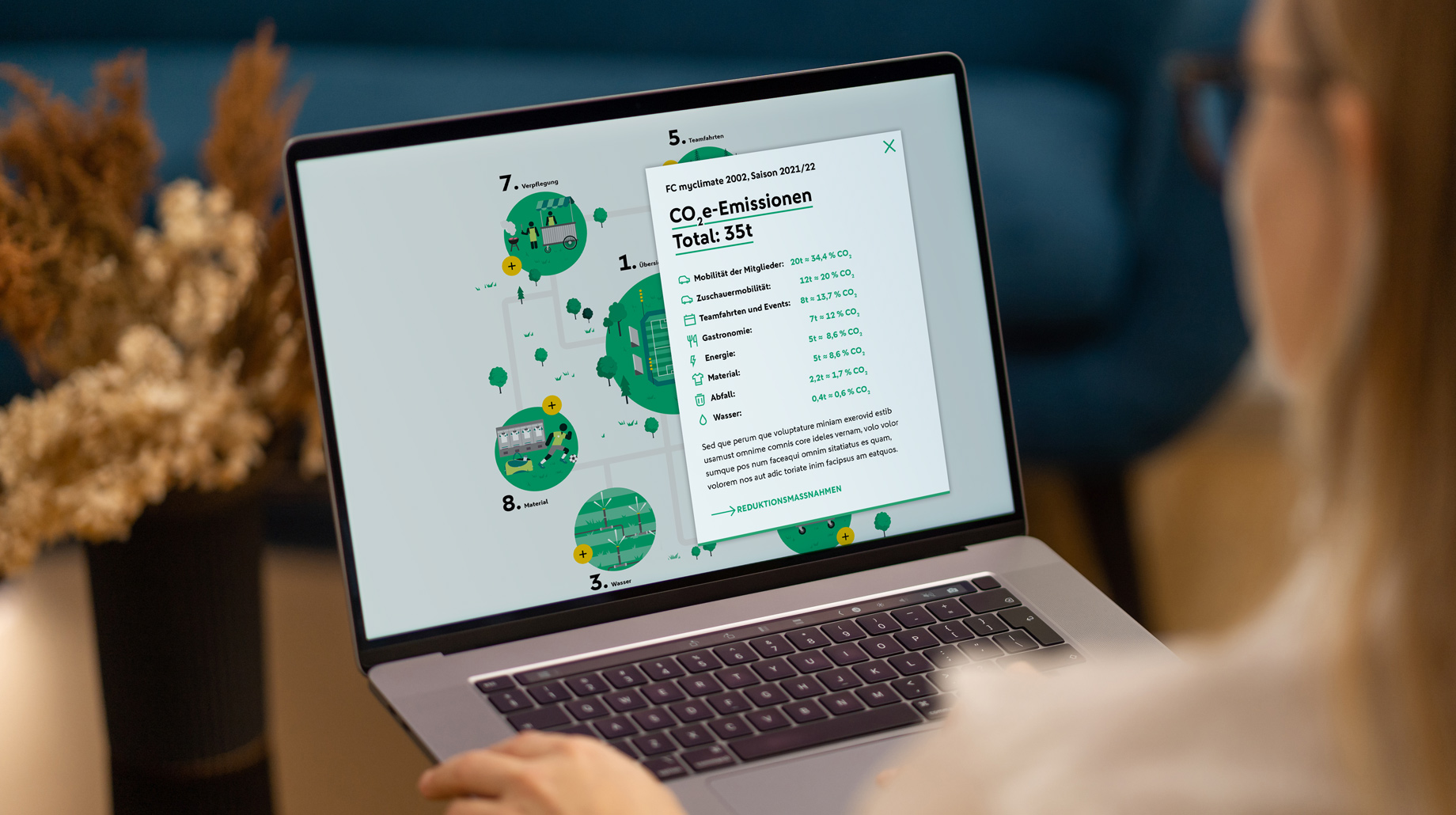
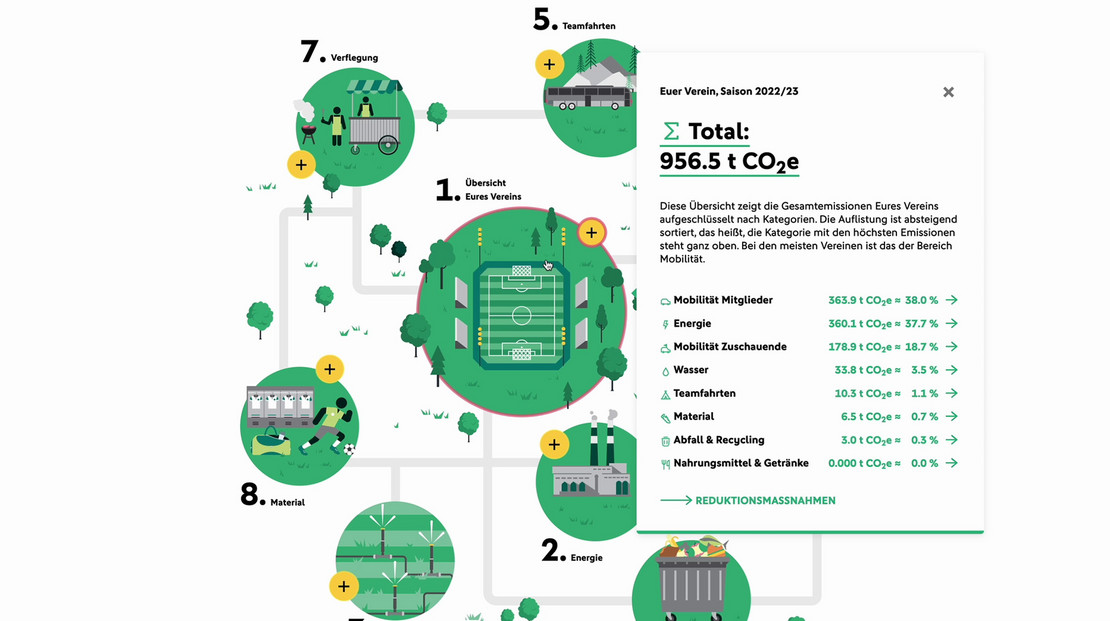
Using an intuitive user interface, clubs record data from areas such as transport, energy, events and team travel. If exact figures are not available, estimates can be used, which are extrapolated based on data collected during the pilot phase.
Once the data has been entered, it is analysed: in a numerical and visually presented overview, clubs can identify their largest sources of emissions and receive guidance on potential for reductions.
Our partnership with myclimate is characterised by a shared conviction: climate protection requires practical, easily accessible solutions. The DFB Climate Impact Tool is precisely such a tool, and myclimate is helping us to ensure it is as useful as possible for the many dedicated clubs across Germany.
By the end of 2025, 1,700 clubs had created an account, and 579 calculations had already been carried out. A further increase is expected for 2026. Initial results show that amateur football clubs in Germany generate an average of 215 tonnes of climate impact per year. At 62 per cent, the largest share clearly comes from members’ travel. Clubs in southern Germany are particularly committed: 258 of the 579 calculations carried out so far originate from this region.
With the carbon footprint tool, the DFB is providing amateur clubs with an important instrument to take responsibility for their greenhouse gas emissions and derive targeted measures. In addition, at klimaschutz.dfb.de, the DFB offers concrete suggestions for practical climate protection measures – such as switching to green electricity, using water-saving shower heads or opting for reusable rather than single-use materials.
The DFB also recommends updating the recorded data annually – for each football season. This is the only way to document progress at club and association level in a transparent manner.