The scientific evidence is clear: to limit global warming to 1.5 degrees, global emissions must be drastically reduced. Tourism businesses are affected in three ways – as part of the problem, as those affected, and as part of the solution. Both regulatory requirements and changing customer needs play a role here. Due to commitments made and enshrined in law – for example under the Swiss Climate and Innovation Act, which already requires transformation plans – the pressure to act is becoming increasingly tangible in Switzerland. Guests, on the other hand, now expect transparency, credible measures and offerings that reduce environmental impact.
Kursaal Bern AG also wanted to rise to these challenges. As early as 2006, they were a founding member of the “Climate Platform of the City of Bern”, which advocates for a significant reduction in CO2 emissions. Following many further steps, carbon footprinting was carried out in 2019 in collaboration with myclimate. The results revealed the key areas for improvement: heating, lighting, food (from the menu and procurement to disposal) and laundry. Rather than changing everything at once, the team took a strategic, step-by-step approach.
We are proud of what we have achieved, but we also know that we still have some way to go. Sustainability is a long journey with many stages
This approach is characteristic – and sensible. An initial assessment is ideal for this purpose and is also necessary for a net-zero strategy. But what does net-zero mean?
Firstly, net zero describes the state in which a business has reduced its emissions as far as possible by 2050 at the latest. For the remaining emissions that are technically or economically unavoidable, financing for climate protection projects aimed at the permanent removal and storage of CO₂ is then provided on a like-for-like basis. Ideally, during the reduction process, a company takes responsibility for its annual emissions by supporting reduction and nature-based climate protection projects, thereby contributing to the wider societal goal. This project support is summarised under the term Ongoing Emissions Responsibility (OER). This term was coined by the Science Based Targets initiative (SBTi), which has translated the net-zero process into a practical concept in a scientifically sound and credible manner. It is regarded as the world’s leading standard for corporate climate protection. An increasing number of companies are aligning themselves with it.
One thing many hotels have in common is the issue of funding: how should concrete measures be paid for today, even if they will pay off in the long run? One option is to involve guests. Transparent communication and voluntary contributions make it possible to shape climate protection responsibly together. This builds trust. So-called fund models exist for tourism businesses and even for entire destinations.
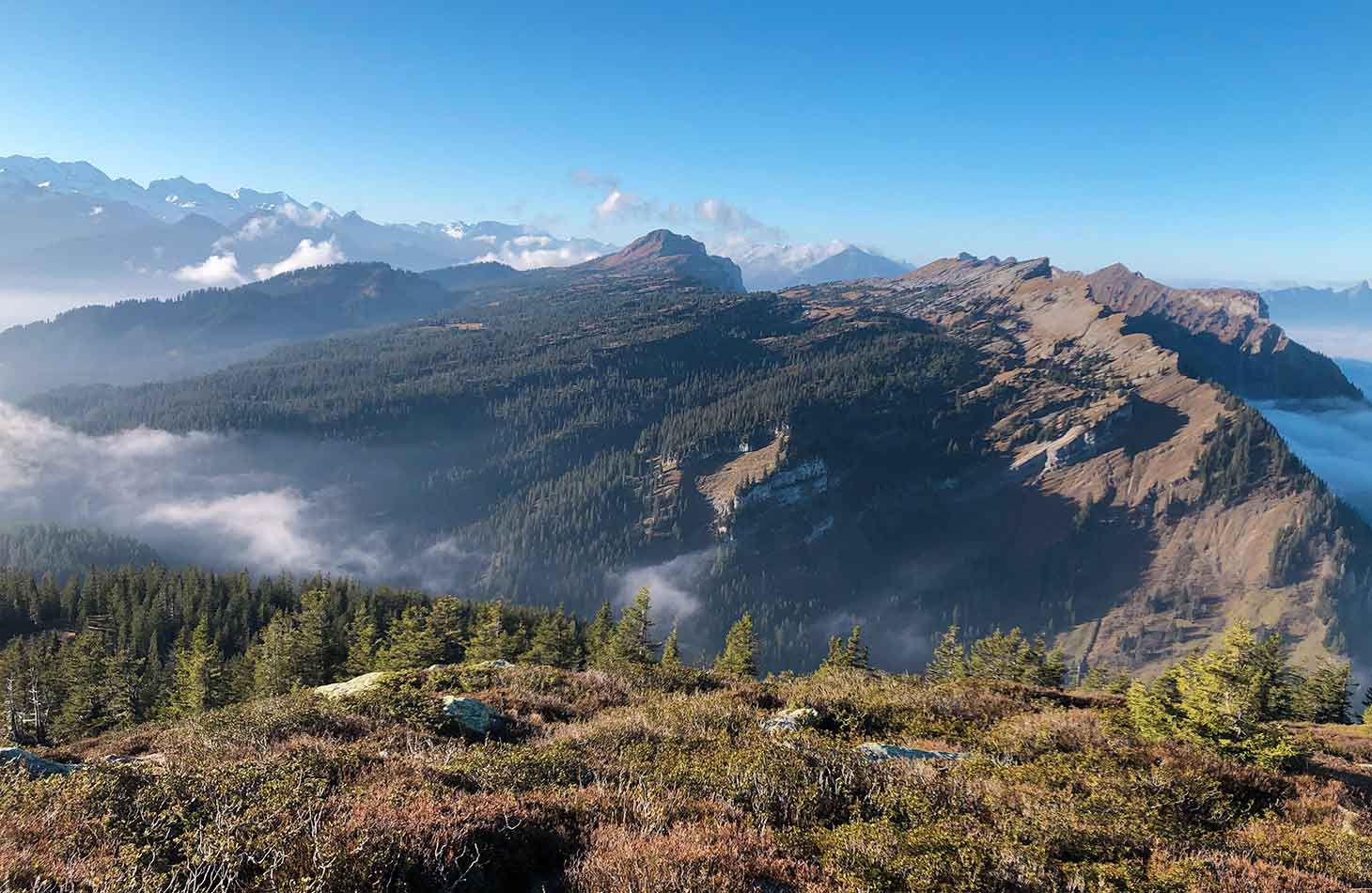
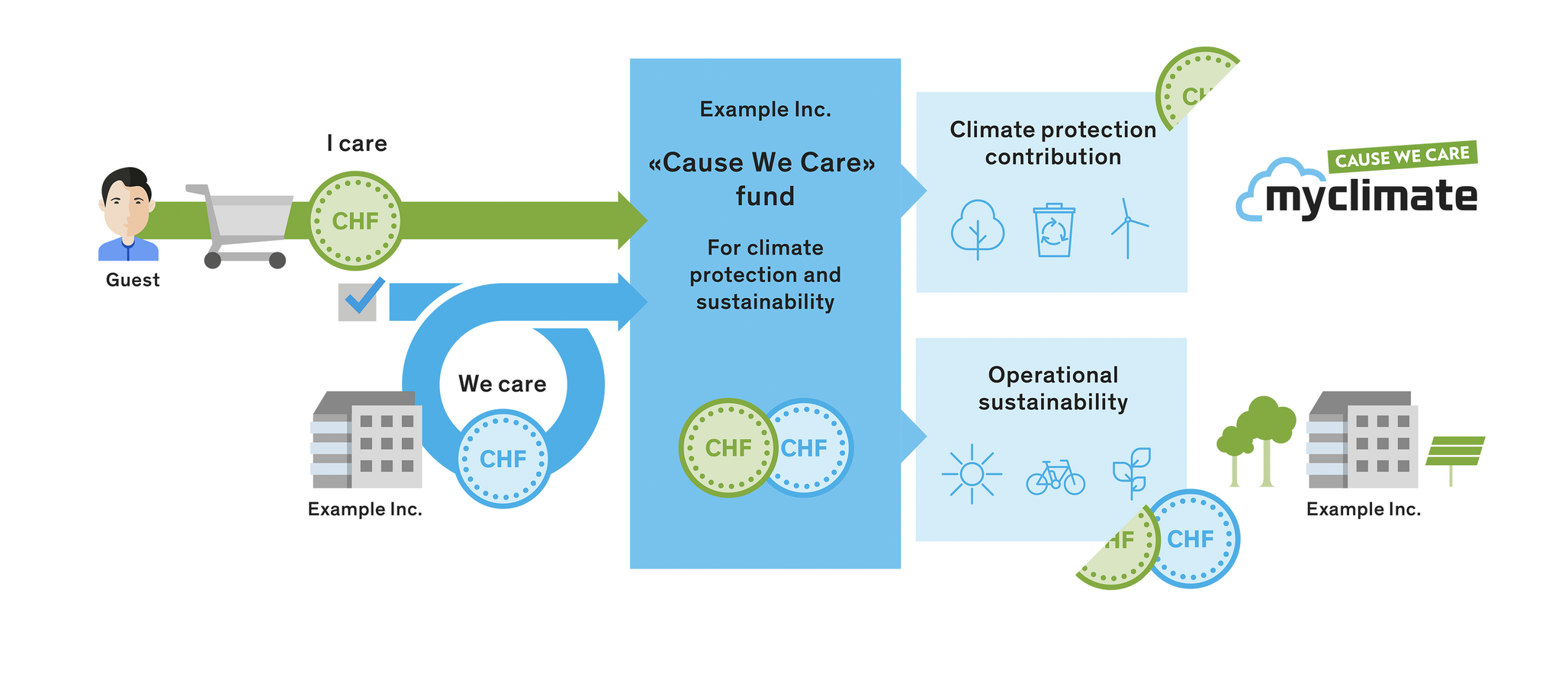
Kursaal Bern has opted for myclimate’s "Cause We Care” scheme: when hotel guests or conference attendees make a contribution to climate protection, the business doubles the amount and pays it into its own fund. A portion of the proceeds goes towards myclimate’s climate protection projects with measurable impact. For example, into the local Beatenberg-Habkern natural forest reserve in the canton of Bern, enabling a 529-hectare forest to fulfil its potential as a carbon sink and habitat for native wildlife. The other part goes towards the business’s sustainability measures. The ‘Cause We Care’ fund model, founded in Switzerland, has now recorded over nine million bookings with a contribution to climate protection.
This level of guest involvement is also beneficial because travel to and from the hotel is often the biggest source of emissions, over which the hotel has no direct control. This is where smart initiatives or partnerships for alternative travel options are needed, such as a discount for guests arriving by train.
There is yet another advantage in terms of marketing: it is expected that the Swiss Unfair Competition Act (UWG) will also undergo an adaptation to the ‘Empowering Consumers Directive’, which comes into force in the EU in September. The ‘EmpCo’ prohibits general environmental claims and instead requires specific, verifiable statements. A net-zero strategy provides the basis for this adaptation.
Whether a large establishment or a small family-run business – every hotel can start implementing these effective steps today. Small steps in analysing, reducing, participating in and ultimately financing climate protection projects will, over time, come together to form a comprehensive strategy that pays off for the business. The path to net zero does not have to be complicated. The key is to get started.
This article was first published in a slightly modified form in ‘htr hotelrevue’, the trade journal for the Swiss hotel industry, and on HTR.ch.