

Editorial
Mature. And ready for the Future.
Dear reader,
Courage: you don’t need it when everything’s going fine. But when conditions change, certainties waver and there are decisions to be made in uncertain times – that’s when it counts. For myclimate, 2025 was a year for courage.
We matured. We became leaner and more focused.
And we’re ready.
For us, maturity means taking responsibility, creating clarity and reducing complexity while remaining open to different perspectives. In an environment marked by regulatory changes, economic restraint and perceptible fatigue in public climate discourse, we made decisions that were not easy, but necessary. We put them into action prudently, fairly and with a view to the future. Today, they form the foundation for ensuring that myclimate remains effective, credible and successful in the future.
Business Figures
Operating Account and Balance Sheet
| 2025 | 2024 | |
|---|---|---|
| Income | CHF | |
| Donations and income from contributions to climate protection * | 37,766,996 | 47,862,099 |
| Income from Consulting and Solutions services | 3,039,526 | 3,736,841 |
| Donations and income from Climate Education services | 1,272,525 | 1,750,919 |
| Other income | 2,629,801 | 2,319,218 |
| TOTAL INCOME | 44,708,848 | 55,669,077 |
| Expenses | ||
| Expenses for climate protection projects | -30,680,773 | -35,204,684 |
| Expenses for Consulting and Solutions | -2,278,503 | -2,460,484 |
| Expenses for Climate Education | -1,376,291 | -2,177,125 |
| Other expenses for service provision | -305,172 | -576,598 |
| Total expenses for service provision | -34,640,739 | -40,418,891 |
| Total expenses for sales, marketing & administration | -9,569,926 | -11,594,688 |
| OPERATING RESULT | 498,183 | 3,655,498 |
| Total financial result | 1,143,293 | 2,010,182 |
| Total other result | -34,019 | 50,034 |
| RESULT BEFORE CHANGE IN FUND CAPITAL | 1,607,458 | 5,715,714 |
| Withdrawals from climate protection projects fund | 31,863,188 | 35,034,714 |
| Deposits in funds for climate protection projects | -35,753,718 | -42,841,448 |
| TOTAL CHANGE IN FUND CAPITAL | -3,890,530 | -7,806,734 |
| ANNUAL RESULT (Before allocation to organizational capital) | -2,283,072 | -2,091,019 |
| Result after allocations | 0 | 0 |
| 31.12.2025 | 31.12.2024 | |
| ASSETS | CHF | |
| Current assets | ||
| Cash and cash equivalents | 15,715,429 | 16,912,334 |
| Accounts receivable from deliveries and services | 26,722,491 | 18,778,947 |
| Inventories and uninvoiced services | 34,198,871 | 33,167,136 |
| Accrued income and prepaid expenses | 11,506,596 | 7,412,623 |
| Total current assets | 88,143,387 | 76,271,040 |
| Financial assets | 16,534,179 | 16,147,367 |
| Property, equipment and intangible assets | 2,121,665 | 2,489,735 |
| Shareholdings | 42,000 | 42,000 |
| Total fixed assets | 18,697,845 | 18,679,102 |
| TOTAL ASSETS | 106,841,232 | 94,950,142 |
| LIABILITIES | ||
| Liabilities from deliveries and services | 7,871,452 | 4,152,909 |
| Accrued expenses and deferred income | 32,345,316 | 25,763,287 |
| Total current liabilities | 40,216,769 | 29,916,196 |
| Total Fund Capital | 64,050,977 | 60,160,448 |
| Total organisational capital | 2,573,485 | 4,873,498 |
| TOTAL LIABILITIES | 106,841,232 | 94,950,142 |
* myclimate changed its accounting guidelines as of 1 January 2023 (see 2024 Consolidated Financial Statements). Since then, revenueS haVE only been recognised once a service has been provided to the customer and the certificates sold in connection with that service were held by the foundation at that time.
As at 31 December 2025, CHF 5.8 million was therefore deferred as prepayments from customers. Including these deferrals, revenue for 2025 would amount to CHF 43.3 million, and CHF 45.8 million for the previous year.
General
SDG impact reporting
Climate Protection: More than just CO₂ Reduction
myclimate has developed and supported about 240 climate protection projects in a total of 48 countries around the world since its foundation in 2002. myclimate’s climate protection projects not only avoid or sequester CO₂, they also contribute to the achievement of the United Nations’ Sustainable Development Goals (SDGs). We measure this impact and present it transparently using key figures. To date, more than 12.2 million people have benefited from the measures, and more than 366,000 people have been trained in climate protection projects. The following figures show the key areas of impact from this reporting from the beginning of 2002 to the end of 2025.
43,300
smallhold farming families use improved farming methods.
87,180
biogas plants installed, improving the health of women and children
3.65 billion
litres of clean drinking water treated
1.66 million
solar panels and efficient stoves installed, replacing fossil energy sources
12,600
permanent and temporary jobs created
25.8 million
tonnes of CO₂ saved in myclimate climate protection projects
6.9 million
trees planted, providing income for families of smallholder farmers
CEO dialogue
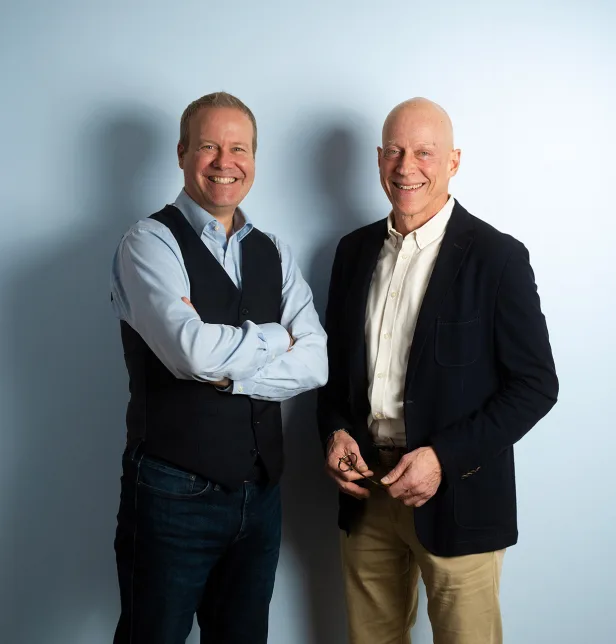
Florian Goppel and Pascal Wieser on Motivation, Leadership and the Future
Two perspectives, one shared vision: Florian Goppel and Pascal Wieser are now co-CEOs of myclimate. In this interview, they talk about motivation, successful collaboration and why trust and humour are just as important as clear goals. Find out how they are driving myclimate’s strategic development and where they see opportunities and challenges for the voluntary carbon market.
“We will be aligning ourselves more closely with our customers’ path to net zero – with more transparency about the impact and workings of our solutions and stronger support along the entire decarbonisation journey. Customers can expect greater dynamism and closer attention.”
Florian Goppel, Co-CEO
Success Stories
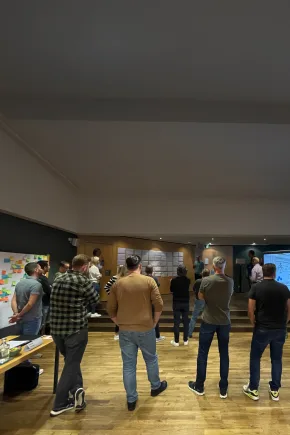

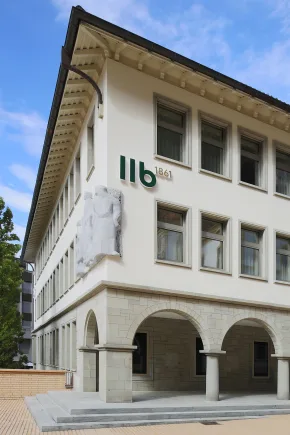
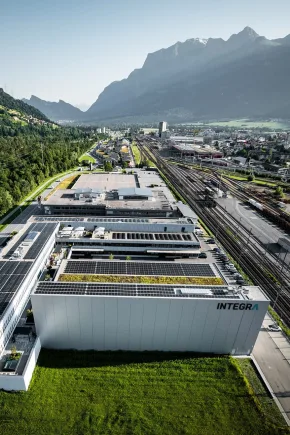
“For us, myclimate is a reliable partner that ensures transparency and credibility in carbon footprint calculations and climate protection projects. This professional collaboration is helping us to consistently decarbonise our banking operations and effectively implement our net-zero strategy.”
Dr. Konstantin Lübbe, LLB Group Head of Sustainability
Emissions calculation with the DFB climate footprint tool
1700 Amateur Football Clubs Commit to Climate Protection
Football is yet another area affected by climate change. Heatwaves and extreme weather are increasingly impacting training and matches. As the largest mass sport in Germany, football not only has a particular impact, but also a great responsibility and leverage effect. Together with myclimate, the German Football Association has developed a free carbon footprint tool for amateur football clubs.
The tool enables clubs to systematically record their greenhouse gas emissions, identify key emission sources and derive targeted climate protection measures. This makes climate protection tangible and comprehensible for thousands of volunteers in their day-to-day work. Numerous amateur clubs are already using the program to take responsibility and integrate climate protection into football – in practical, low-threshold, impact-oriented steps.

Food security and emissions reduction
Sustainable Agriculture at the Migros Group
The Migros Group and myclimate have been working together for several years to promote climate protection throughout the value chain in a targeted manner. The Migros Group’s sustainability strategy, which includes science-based climate targets (SBTi), covers its entire, diverse portfolio and addresses emissions across all business areas. As a retailer with complex supply chains, Migros takes responsibility beyond its own operations, specifically targeting emissions generated along the upstream value chain. Together with Migros, myclimate has developed projects that promote climate-adapted agriculture, strengthen the resilience of producers, and contribute to food security in Switzerland and within international supply chains. The focus is not only on reducing emissions, but also on creating fair conditions and long-term prospects for agricultural businesses. We spoke to Claudia Regenass, Head of Business Services in the Sustainability & Economic Policy Department at the Migros Group, to find out why agriculture plays such a central role in the group-wide sustainability strategy.

Climate Protection Projects
Making an impact
More than 240 Climate Protection Projects Worldwide
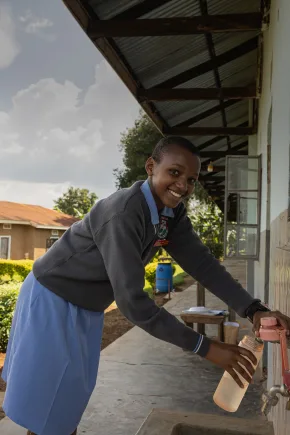
myclimate has developed and supported more than 240 projects in 48 countries around the world since it was established in 2002. Some of them are already complete. The projects cover key technology areas including renewable energy (solar, wind, hydropower, biogas and biomass), energy efficiency (including efficient cookstoves), waste and recycling (waste management and compost), sustainable land use and forest conservation (including biochar), water (purifying and conserving) and climate-friendly transport. Through their co-benefits, these projects also contribute to achievement of the United Nations’ Sustainable Development Goals (SDGs).
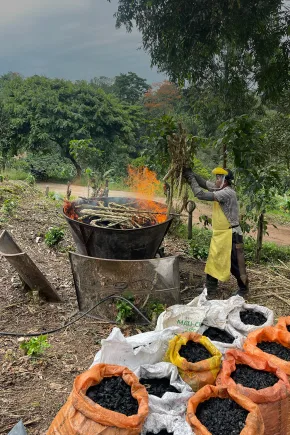
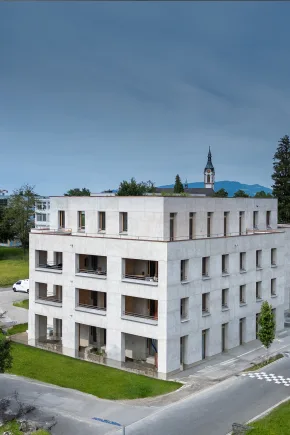
myclimate develops climate protection projects both domestically and internationally, combining local impact with innovative solutions. In 2025, for example, a biochar project in Colombia was added to the portfolio for the first time. This project sequesters CO₂ in the soil over the long term while also improving the livelihoods of coffee farmers. The first project involving biogenic construction materials in the building sector also opened up new avenues for long-term CO₂ storage in the DACH region.
In addition to projects for the voluntary market, myclimate also develops projects for mandatory markets, which includes markets governed by Article 6.2 of the Paris Agreement, as well as company-specific projects that address the value chain, among other areas.
Forests as climate protectors
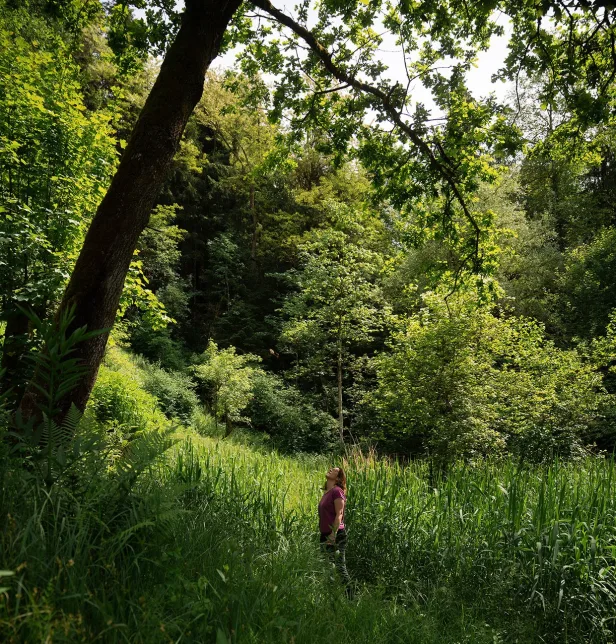
Why is This Carbon Sink Important?
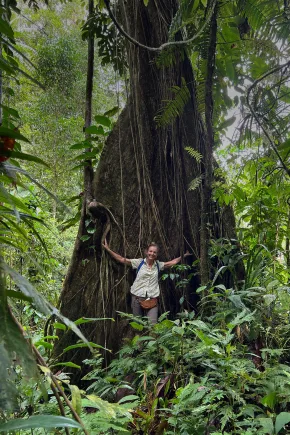
Forests play a key role in regulating our CO₂ emissions, as they store carbon in their biomass and thus act as an important sink. But climate change is changing environmental conditions. Heat, forest fires, storms and pests threaten to turn forests from carbon sinks into sources of CO₂. myclimate therefore relies on nature-based projects to secure and, ideally, increase the sink capacity of forests. With targeted measures such as forest protection, sustainable forest management and the promotion of natural forest reserves, we are strengthening the resilience and resistance to climate change of existing forests – and thus making an important contribution to climate protection. Our commentary on why technical solutions such as direct air capture (DAC) should not replace nature-based initiatives, but rather complement them.
Restoration
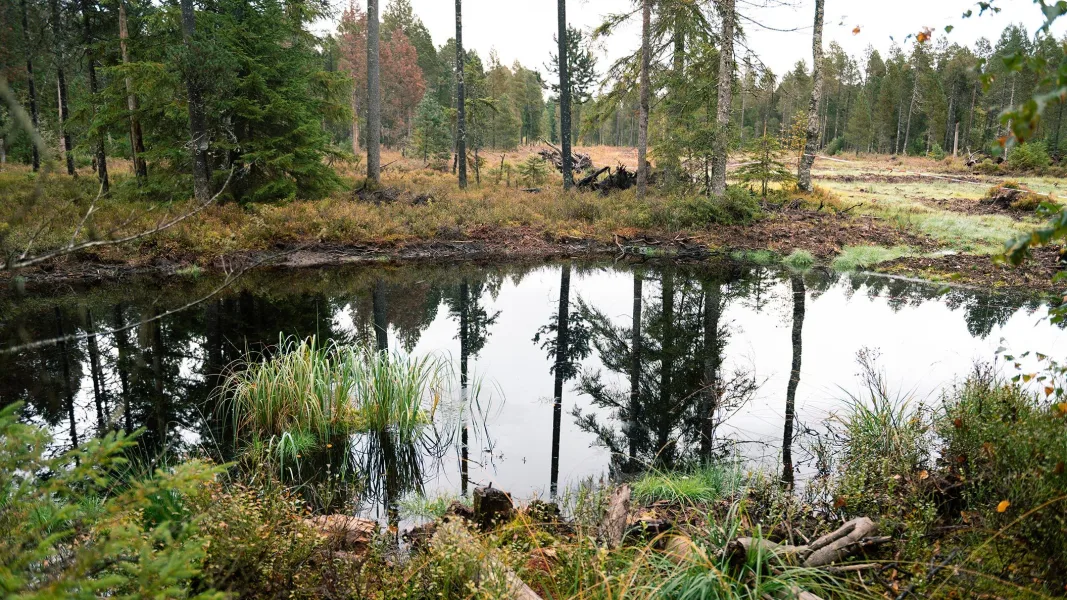
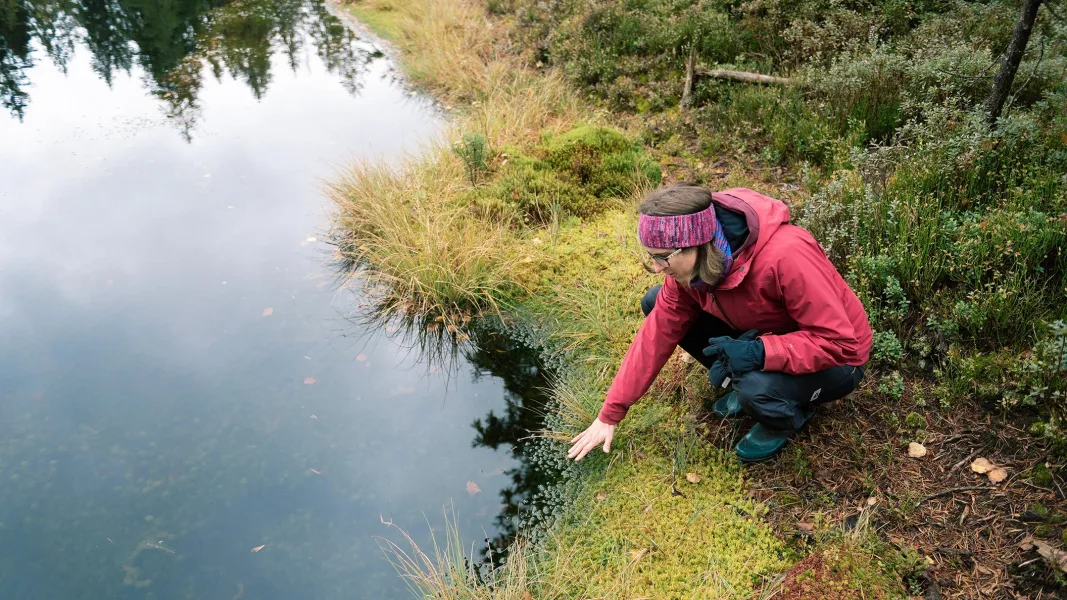
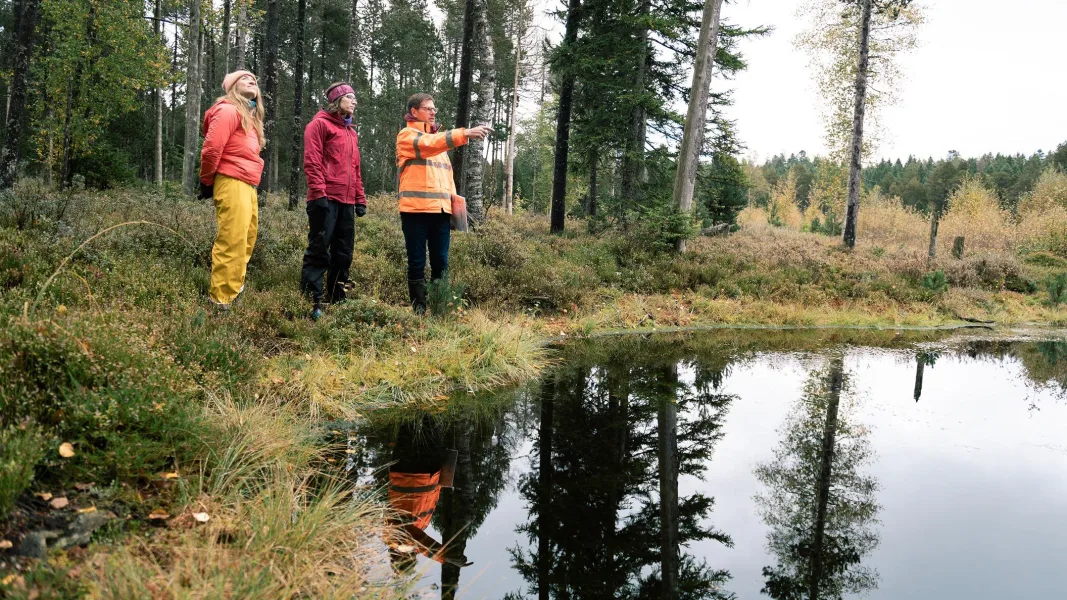
Moorland Protection Works: Small Space, Big Impact
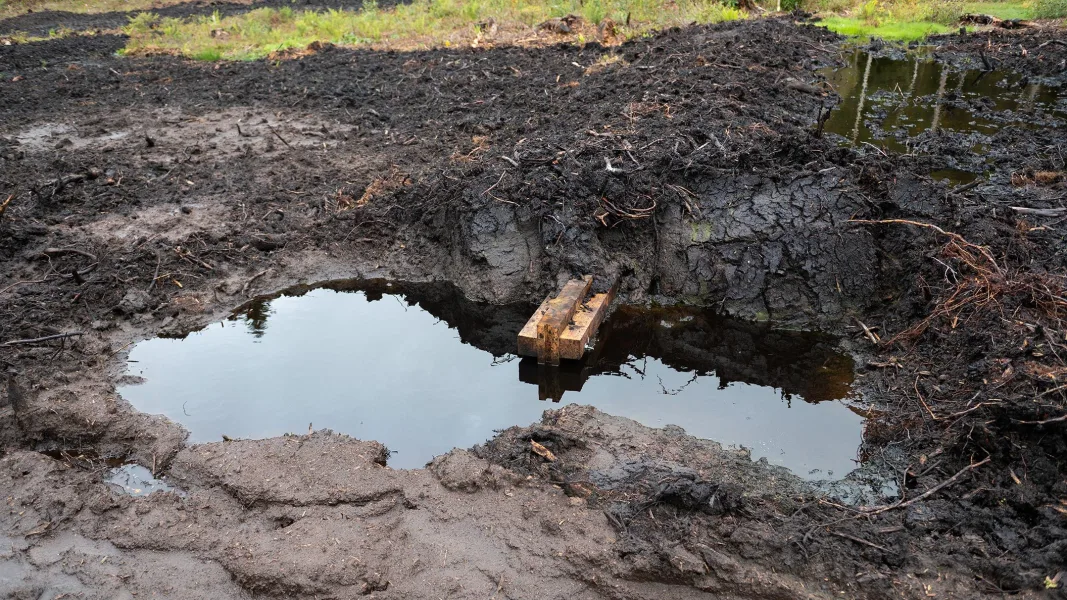
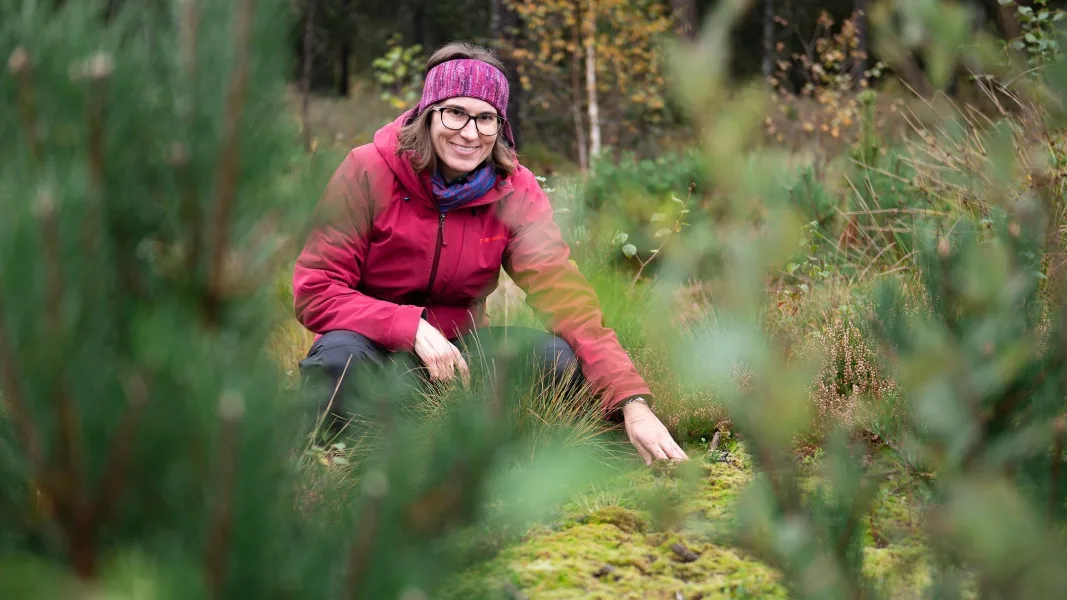
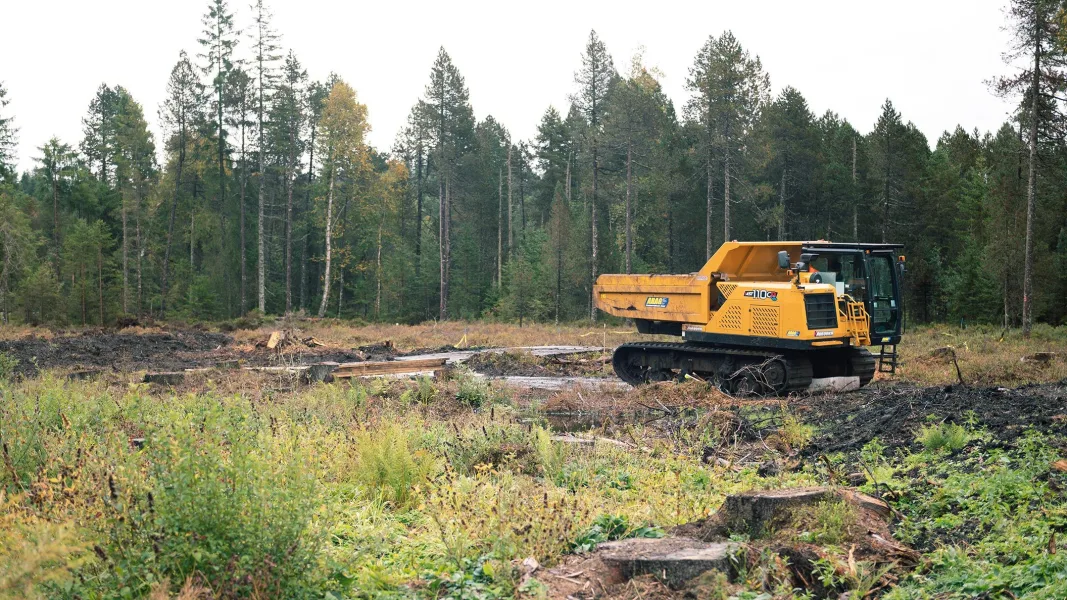
Moors are the silent heroes of climate protection. They store enormous amounts of CO₂ in a small space and provide a home for rare species. But decades of drainage for agriculture and construction have destroyed many of these sensitive habitats. A renaturation project in the canton of Jura – supported by the federal government and organisations such as myclimate – is bringing the water back and reviving the moor. Marc Mallet from the Jura Department for the Environment explains in an interview why this is so important.
Education
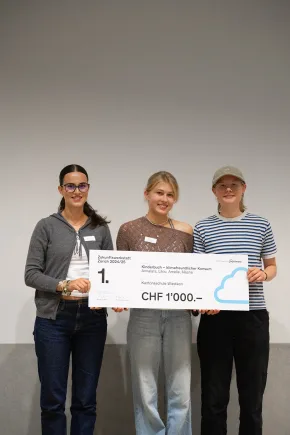

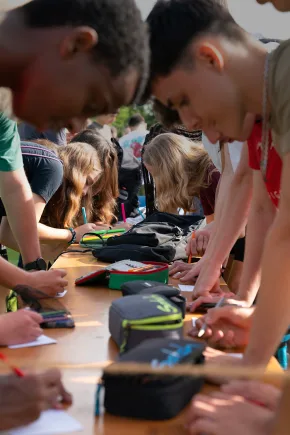
Step by Step Towards a Great Future
1 750
students took part
1 772
apprentices actively engaged with climate protection
283
educational initiatives (workshops, training courses) were carried out
320
projects were developed at all educational levels
*These figures refer to 2024 and Switzerland.
myclimate at Events
Climate Conference 2025 COP 30
Article 6 gains Momentum – and with it the Responsibility of the Private Sector
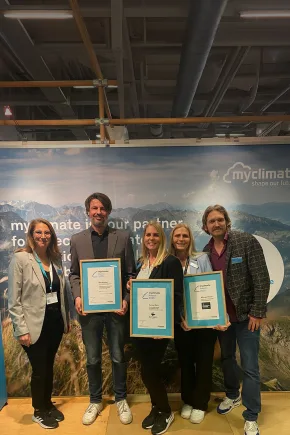
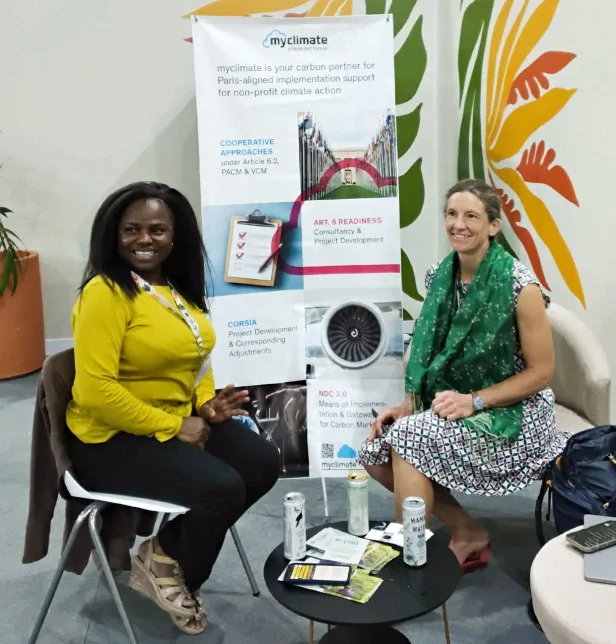
The climate conference in Belém was one thing above all: a ‘working COP’. COP 29 in Baku had already taken care of the big decisions on the implementation of the Paris Agreement. In Belém, it was a matter of fleshing out and implementing existing mechanisms. myclimate was also represented there. For two weeks, our delegation followed the negotiations and held talks with many country representatives, in particular to explore possibilities for international cooperation surrounding Article 6. We’ve put together the most important information for you in a concise summary.
Climate Talk

Note on the photo in the header image:
A glacial rivers from above. Aerial photograph of the river streams from Icelandic glaciers. Beautiful art of the Mother nature created in Iceland.
Adobe Stock from Marek